
Do pets really love their owners? What science tells us about the human-animal bond
Do pets really love their owners, or are they just after food? Explore the science behind the bond between people and pets.
Do pets really love their owners?
Few questions spark more debate among pet owners than whether our pets truly love us. Most of us have experienced the enthusiastic greeting of a dog at the front door, the comforting purr of a cat curled up beside us, or the feeling of a pet seeking us out when they need reassurance. But are these signs of genuine affection, or are our pets simply responding to food, routine and familiarity? While animals do not experience emotions exactly as humans do, research increasingly suggests that many pets form meaningful emotional attachments to the people who care for them.
How do pets form bonds with people?
The relationship between pets and people develops through thousands of everyday interactions. Food, safety, play, affection and routine all contribute to building trust. Over time, pets learn that their owners provide security and comfort, creating strong social bonds. Scientists studying animal behaviour have found that dogs, in particular, actively seek proximity to their owners and often show signs of distress when separated from them. Cats may be more subtle in their displays of affection, but many also form strong attachments to familiar people and environments.
What does science say about pet affection?
One of the strongest pieces of evidence comes from studies examining oxytocin, often referred to as the “bonding hormone”. In both humans and animals, oxytocin plays an important role in social attachment and positive relationships. Research has shown that dogs experience increased oxytocin levels during positive interactions with their owners. Interestingly, owners experience similar hormonal changes when interacting with their dogs. This suggests that the bond between dogs and humans may be biologically reinforced in both directions. Studies involving cats have found evidence of similar responses, although generally less pronounced than those seen in dogs.
Do dogs love their owners?
Dogs are highly social animals that have evolved alongside humans for thousands of years.
Many behaviours commonly seen in dogs suggest strong emotional attachment, including:
- Following their owners around
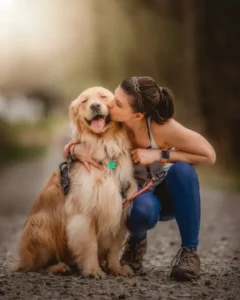
- Seeking physical contact
- Greeting family members enthusiastically
- Looking to owners for reassurance
- Showing signs of distress when separated
While we cannot know exactly what a dog experiences emotionally, behavioural research strongly supports the idea that dogs form deep social bonds with the people in their lives.
Do cats love their owners?
Cats often receive an unfair reputation for being aloof or indifferent. In reality, cats express affection differently from dogs. Rather than dramatic greetings or constant attention-seeking, cats often show trust and attachment through more subtle behaviours.
Common signs of affection include:
- Purring
- Slow blinking
- Head rubbing
- Kneading with their paws
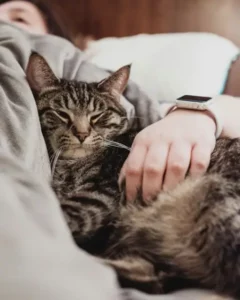
- Sleeping near their owners
- Following people from room to room
Many cats seek out human companionship and appear to derive comfort from being close to trusted family members.
Are pets only interested in food?
Food certainly plays an important role in the relationship between pets and owners, but it is unlikely to be the whole story. Most pet owners have experienced moments when their pet sought comfort, companionship or reassurance despite there being no food involved. Dogs resting beside their owners during difficult times, or cats choosing to sleep close to a family member, suggest that the relationship extends beyond simple reward-based behaviour. The strongest human-animal bonds are built on far more than feeding schedules.
Why do pets seek comfort from their owners?
Just as children seek comfort from trusted caregivers, many pets turn to familiar people when they feel uncertain or stressed. During thunderstorms, fireworks, illness or unfamiliar situations, pets often look to their owners for reassurance. This behaviour reflects trust and attachment and demonstrates the important role owners play in their pets’ emotional wellbeing.
How can we strengthen the bond with our pets?
Strong bonds are built through positive interactions and consistent care. You can strengthen your relationship with your pet by:
- Spending quality time together
- Providing regular exercise and enrichment
- Using positive reinforcement training
- Respecting your pet’s boundaries
- Maintaining predictable routines
- Ensuring good physical and emotional health
Every pet is different, and each relationship develops in its own unique way.
How can we help?
Understanding your pet’s behaviour is an important part of building a healthy relationship. At Ceres Veterinary Hospital, we are passionate about helping pets and their owners enjoy long, happy lives together. We also work closely with Dr Laura McIntyre of Just Nuisance Veterinary Behaviour Consultancy, who provides professional veterinary behavioural support for dogs and cats. Whether you have questions about attachment, anxiety, social behaviour or behavioural changes, our team can help you better understand your pet and strengthen the bond you share.
So, do pets love us?
Science cannot tell us exactly what a pet feels. What it can tell us is that dogs, cats and many other animals form strong social bonds, seek comfort from trusted people and often choose to spend time with those who care for them. Whether you call it affection, attachment, trust or love, the bond between people and their pets is one of the most remarkable relationships in the animal world.
https://www.theguardian.com/lifeandstyle/2019/jul/16/do-our-pets-ever-really-love-us-or-do-they-just-stick-around-for-the-food
https://companyofanimals.com/uk/how-do-dogs-show-love/